Thally Wants to Make Product Knowledge Stay in Sync
A new product-knowledge layer targets the gap between changing software and the documentation users depend on.
 Kirtesh··4 min read·433 words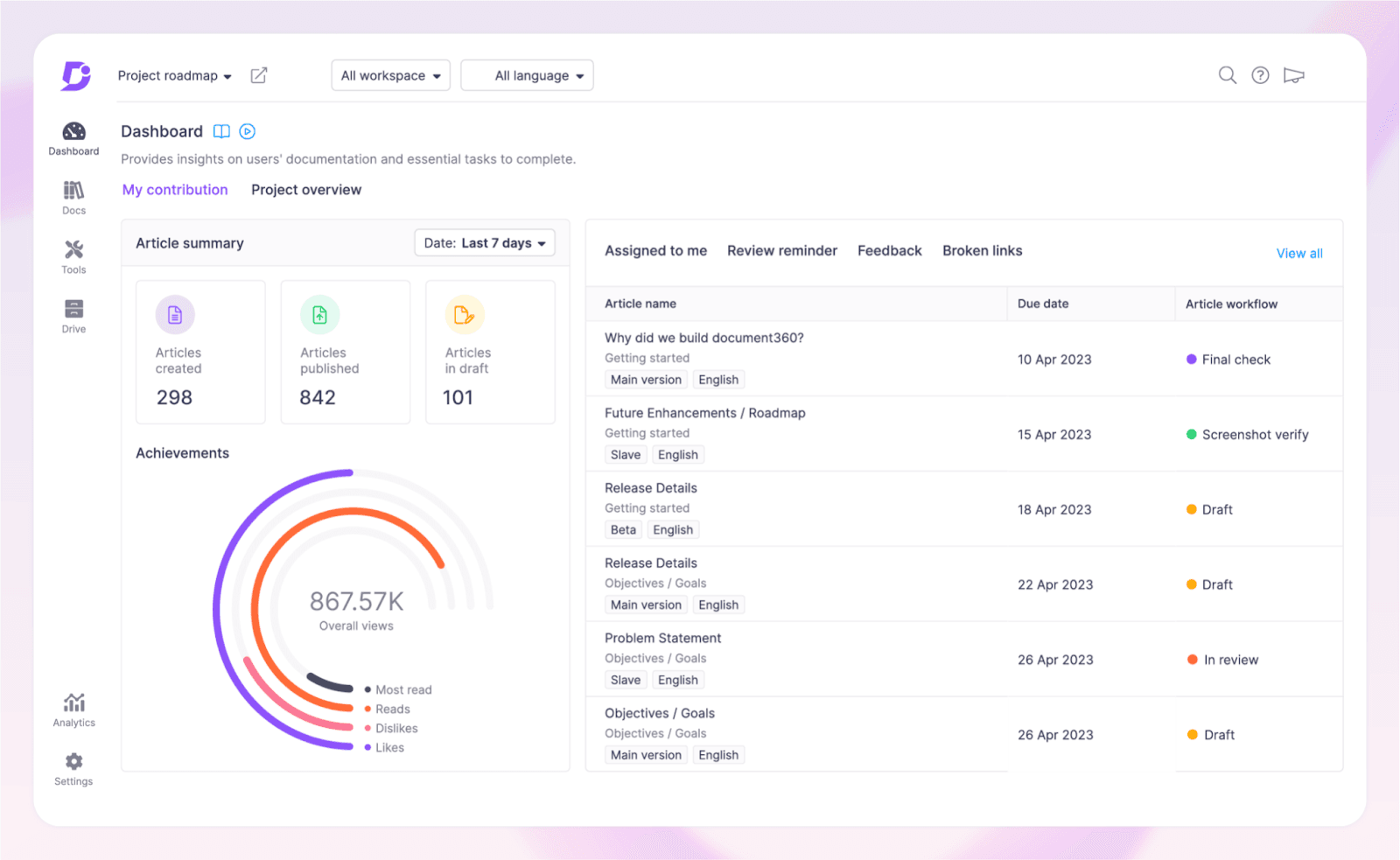
Image: Documentation Platform
Nigeria-based startup Thally has launched a product-knowledge layer designed to keep documentation, websites, support platforms and other customer-facing knowledge aligned as the underlying product changes.
Software products rarely have a single source of truth for what they do. A feature changes in the application, but the help center still describes the old workflow. A pricing page gets updated while support macros lag behind.
That mismatch is more than a documentation problem. For a small SaaS company, it creates support tickets, weakens onboarding, and makes every future product update more expensive.
Nigerian startup Thally launched on September 25, 2026, around this problem. The company describes its product as a knowledge layer for software teams that keeps documentation, websites, support platforms and other places where users learn about a product aligned as the underlying product changes.
Why this matters to indie SaaS teams
A solo founder often treats documentation as a one-time writing task. In reality, documentation behaves more like a product dependency.
Every meaningful release can affect help-center articles, onboarding copy, API examples, sales pages, support answers and customer-facing FAQs.
The opportunity is therefore not simply "better docs." It is synchronization.
The founder-level lesson
The important design question for an indie founder is whether product knowledge has an owner and a change-detection workflow.
A lightweight system can start without another SaaS product:
- Keep canonical feature definitions close to the product code or product spec.
- Give every public feature a documentation owner.
- Add documentation checks to release reviews.
- Search the knowledge base after major UI or API changes.
- Track support questions that repeatedly expose documentation gaps.
Where the product opportunity gets interesting
A knowledge layer could sit between product changes and customer communication. If a release changes an API parameter, the system could identify affected documentation, flag outdated examples, propose edits and ask the owner to approve them.
That is a more defensible workflow than another generic AI writing assistant. The value comes from knowing what changed and which customer-facing artifacts depend on it.
For indie founders, the broader pattern is useful: automation becomes more valuable when it is attached to a source-of-truth problem.
What to watch
The difficult part will not be generating replacement text. The hard parts are provenance, change detection, permissions, approval workflows and proving that the generated update actually matches the current product.
If Thally can connect those pieces without creating another complicated enterprise system, its category could expand beyond documentation into broader product-knowledge infrastructure.
Bottom line
Thally's launch is a useful signal for SaaS builders: documentation is becoming a synchronization problem.
Treat customer knowledge as part of the product, not as a page that gets updated after the product is finished.
Sources
Written by
Kirtesh
Founder
Kirtesh is a software engineer, indie hacker, and tech analyst writing on bootstrapped micro-SaaS, autonomous AI agents, cloud architectures, and the mechanics of building profitable software businesses.