
Practical Caching Strategies for Solo SaaS Founders
A practical guide to deciding when caching is worthwhile, choosing maintainable patterns, handling invalidation, and avoiding cache failures as traffic grows.
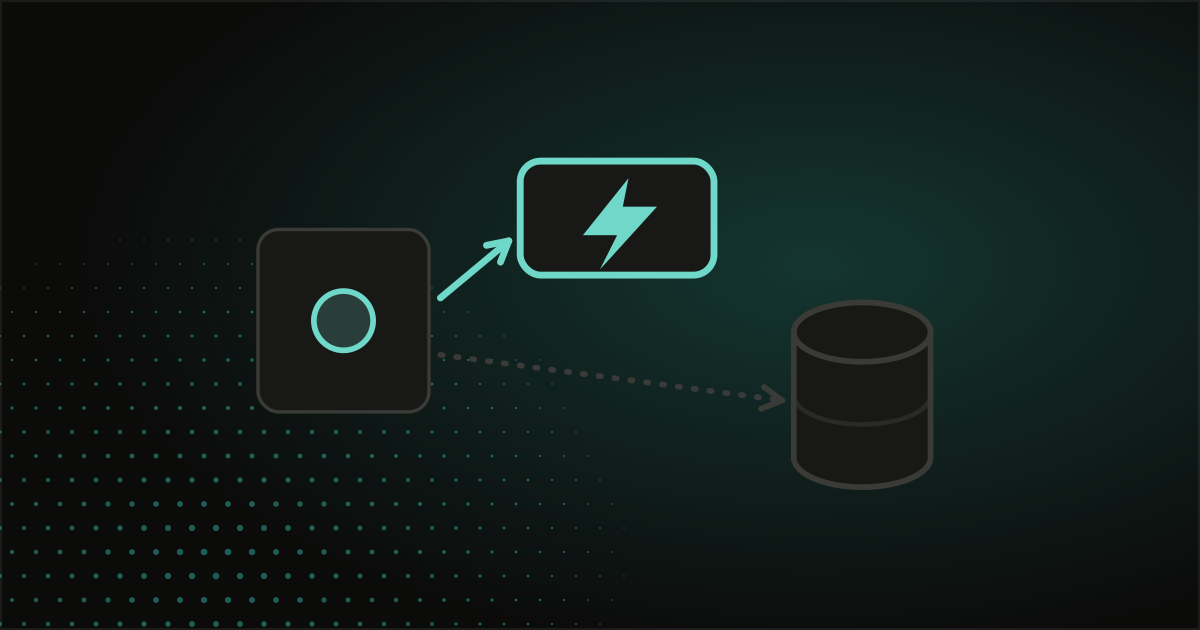

Caching is one of the first optimizations founders reach for when a page or API feels slow. It is also one of the fastest ways to introduce subtle bugs that only appear under load or after a deploy. For a solo founder the cost is not the Redis bill; it is the extra mental model you now have to keep consistent with the database.
This is an operating guide, not an architecture tutorial. The goal is to decide whether a cache is justified right now, which simple pattern fits a one-person team, and how to avoid the classic invalidation and stampede problems without building a platform.
Decide whether you need a cache yet
Most early SaaS products do not. If your slowest queries are already under a couple of hundred milliseconds, the database is not saturated, and you have not measured a clear user-facing latency problem, adding a cache is usually premature.
Caching becomes reasonable when at least one of these is true:
- A small set of read-heavy endpoints (dashboard aggregates, public pricing pages, popular list views) dominate latency or database CPU.
- You are repeatedly computing the same expensive result (large joins, external API enrichment, report generation) for many users.
- Traffic spikes are causing database connection or CPU limits that a simple application-level cache would smooth out.
- You already have a clear measurement (logs or metrics) showing the same query or computation is the bottleneck.
If none of those apply, spend the time on indexes, query shape, or N+1 fixes first. A cache on top of a bad query just hides the problem until the cache expires.
Prefer the simplest pattern that solves the measured problem
Two patterns cover most solo-founder needs.
Cache-aside (lazy loading) for application data: on a read, check the cache; on a miss, load from the database, store the result, and return it. Writes go to the database first, then you delete or update the cache key. This is the default for most SaaS because the database remains the source of truth.
HTTP caching for public or semi-public responses: set Cache-Control headers (or use a CDN) so browsers and intermediate caches store the response. Useful for marketing pages, docs, or any endpoint whose data changes on a predictable schedule and does not contain per-user secrets.
Illustrative cache-aside flow (adapt to your stack):
- Generate a stable key that includes every input that changes the result (user id or tenant id, resource id, filter values, version).
- Try the cache. On hit, return immediately.
- On miss, query the database, store the result with a TTL, return it.
- On any write that affects the result, delete the relevant keys (or update them if the new value is already known).
Keep TTLs short enough that stale data is acceptable for the feature (minutes to an hour for most dashboards; longer only for truly static content). Never rely on TTL alone for data that must be consistent with a user action the user just performed.
Invalidation that a solo founder can actually maintain
The hard part is not the get/set. It is knowing which keys to remove when data changes.
Practical approaches that stay manageable:
- Explicit key deletion on write. When you update a record, delete the specific keys you know are derived from it. Document the key pattern in a comment or a short internal note so future-you (or a contractor) can find them.
- Versioned or tagged keys. Include a version number or a short tag in the key (for example
dashboard:v3:tenant:123). Bump the version on a deploy that changes the computation. Old keys simply expire. - Short TTLs plus explicit invalidation for critical paths. Use a 5–15 minute TTL for most data and force-delete only the keys tied to the action the user just took (profile update, subscription change).
- Avoid broad pattern deletes in production.
KEYSor largeSCAN+ delete operations can stall Redis under load. Prefer specific keys or a background job that expires a known set.
If the set of derived keys is hard to enumerate, the feature is probably not ready for caching. Simplify the read path first.
Avoid the stampede and the thundering herd
When a popular key expires, many concurrent requests can all miss at once, hammer the database, and then all try to write the same value back. Solo founders feel this as a sudden database spike after a deploy or after a TTL boundary.
Simple mitigations:
- Use a slightly randomized TTL (base + jitter) so keys do not expire simultaneously.
- On a miss, acquire a short lock (or use a single-flight pattern in your language) so only one request populates the cache; others wait or return a slightly stale value if you already have one.
- For truly hot keys, consider a longer TTL and more aggressive explicit invalidation instead of pure time-based expiry.
- If the computation is expensive, pre-warm the cache on deploy for the top N tenants or pages rather than waiting for the first user.
These patterns exist in most languages and Redis clients; you do not need a custom library.
What not to cache (or to cache with extreme care)
- User-specific secrets or session data that must be immediately consistent. A logout or permission change that is still served from cache is a support ticket waiting to happen.
- Data that changes on every write and is read rarely. The invalidation cost exceeds the benefit.
- Large objects that will blow memory. Cache the identifiers or the summary, not the full payload, unless you have measured the memory impact.
- Results that include data from external paid APIs without a clear refresh policy. You can easily create a bill spike or serve outdated enrichment.
Treat the cache as a performance optimization, not as a second source of truth. If the cache is empty or unreachable, the application should still work (slower). Configure your client with short timeouts and a circuit-breaker style fallback so a Redis outage does not take the product down.
Observability for the cache itself
You need a few signals so you know whether the cache is helping:
- Hit rate on the keys or endpoints you care about.
- Latency of cache get/set versus database query.
- Eviction or memory-pressure indicators if you are near the plan limit.
- Error rate when the cache is unreachable.
Most managed Redis offerings and host metrics give you these. If hit rate stays low after a week, the key design or TTL is wrong, or the workload was never a good candidate. Turn it off rather than leaving dead complexity.
Practical checklist before you ship a cache
- You have measured a specific slow path (query time, endpoint latency, or database load) that the cache will address.
- Key generation includes every input that affects the result; no accidental cross-tenant or cross-user leakage.
- Writes delete or update the relevant keys; the invalidation set is documented.
- TTLs are short enough for the feature’s consistency needs, with jitter if volume is high.
- Cache unavailability does not break the request path (timeouts + fallback to database).
- You have a way to flush or version keys on deploy if the computation changes.
- Sensitive fields are never stored in the cache, or are encrypted if they must be.
- Basic hit-rate or error visibility exists so you can tell if it is working.
Common pitfalls
- Caching the result of a query that still has an N+1 or missing index, then being surprised when the miss path is still slow.
- Using a shared cache key that omits tenant or user id, so one customer sees another’s data.
- Relying only on TTL for data the user expects to see updated immediately after their own action.
- Running a large
KEYS *delete during a deploy and locking the cache. - Forgetting to handle the case where the cache returns a value the current code no longer understands after a schema or computation change.
- Adding Redis “because everyone does” before the database is the actual bottleneck.
When the simple approach is no longer enough
Revisit or expand the setup when:
- Multiple services need a consistent view of the same cached data and you start building ad-hoc invalidation buses.
- Hit rates are high but memory or eviction pressure is constant; you need better sizing or a different store.
- You require strong consistency across regions or you are adding multi-region writes.
- The invalidation logic has become a source of production bugs more often than the original slow query.
Until then, a measured cache-aside layer (or simple HTTP cache headers) on the one or two paths that actually hurt will give most solo SaaS products the speed improvement they need without a new operational burden. If you cannot explain in one sentence which keys a given write must invalidate, the cache is not ready. Keep the database as the single source of truth and treat the cache as a disposable accelerator.
The best cache is the one you can delete tomorrow and still have a working product. Design for that.
Sponsor this article · $29 / 30 days
More in Engineering & Architecture
Practical Schema Migrations for Solo SaaS
A practical approach to database schema changes for solo founders: expand-contract patterns, safe deployment order, a...

Practical Background Jobs and Queues for Solo SaaS Founders
A practical guide to moving slow work off the request path, operating a small queue, handling failures, and deciding ...