Taking a Salary as a Solo SaaS Founder: A Practical Framework
How to decide when and how much to pay yourself from a bootstrapped SaaS without starving growth or burning out. Includes runway rules, tax considerations, and reinvestment thresholds.

Most solo SaaS founders treat personal pay as an afterthought. Early on they reinvest everything; later they either underpay themselves into burnout or overpay and starve the product of the cash it needs to stay reliable. A clear rule set makes the decision repeatable instead of emotional.
This framework is for bootstrapped products with real revenue and modest costs. It is not tax or legal advice. Rules differ by country, entity type, and whether you have other income. Check with a qualified accountant before you transfer money.
Separate business cash from personal cash first
Before any salary discussion, the business should have its own bank account and accounting. Mixing personal and product money makes it impossible to know whether the SaaS is actually profitable or whether you are subsidizing it.
Minimum setup most founders use:
- Business checking account for revenue and operating expenses.
- Separate savings account (or high-yield equivalent) for taxes and buffer.
- Simple bookkeeping tool that tags revenue, hosting, software, and contractor payments.
- Monthly close: reconcile bank, categorize expenses, and note true net cash.
Until this is reliable, “paying yourself” is just moving numbers between pockets.
The three buckets that compete for every dollar
Every month of positive cash has three legitimate claims:
- Operating buffer — enough cash to cover fixed costs (hosting, domain, email, monitoring, insurance, minimum contractor time) for a defined number of months even if new sales stop.
- Growth and reliability spend — the next useful thing that reduces support load, improves activation, or prevents outages (better error tracking, a backup process, a targeted experiment).
- Founder pay — the amount that keeps you able to work without constant financial stress or a second job that drains focus.
A common failure mode is skipping the buffer and treating the first profitable months as personal income. Another is never taking pay “until it feels safe,” which often means never.
Set a runway floor before any distribution
Decide a minimum cash reserve expressed in months of fixed operating costs. For a typical micro-SaaS this is often three to six months. Include:
- Hosting and database bills at current usage.
- SaaS tools the product depends on (email, error tracking, billing).
- Domain, SSL, and basic insurance if you carry it.
- A small contingency for a spike in support or a necessary tool upgrade.
Illustrative example only: If fixed monthly costs are roughly $400 and you choose a four-month floor, keep at least $1,600 in the business account before you consider a transfer to yourself. Recalculate the floor whenever costs change (new AI API usage, higher database tier, added monitoring).
Only cash above the floor is available for growth spend or founder pay.
A simple decision order each month
- Pay all business bills and set aside estimated taxes.
- Confirm the operating buffer is still intact.
- Fund any must-do reliability or compliance item (backups, security patch, privacy update).
- Allocate a defined percentage or fixed amount to founder pay, if the buffer rule is met.
- Put the remainder into a growth/reliability reserve or leave it as extra buffer.
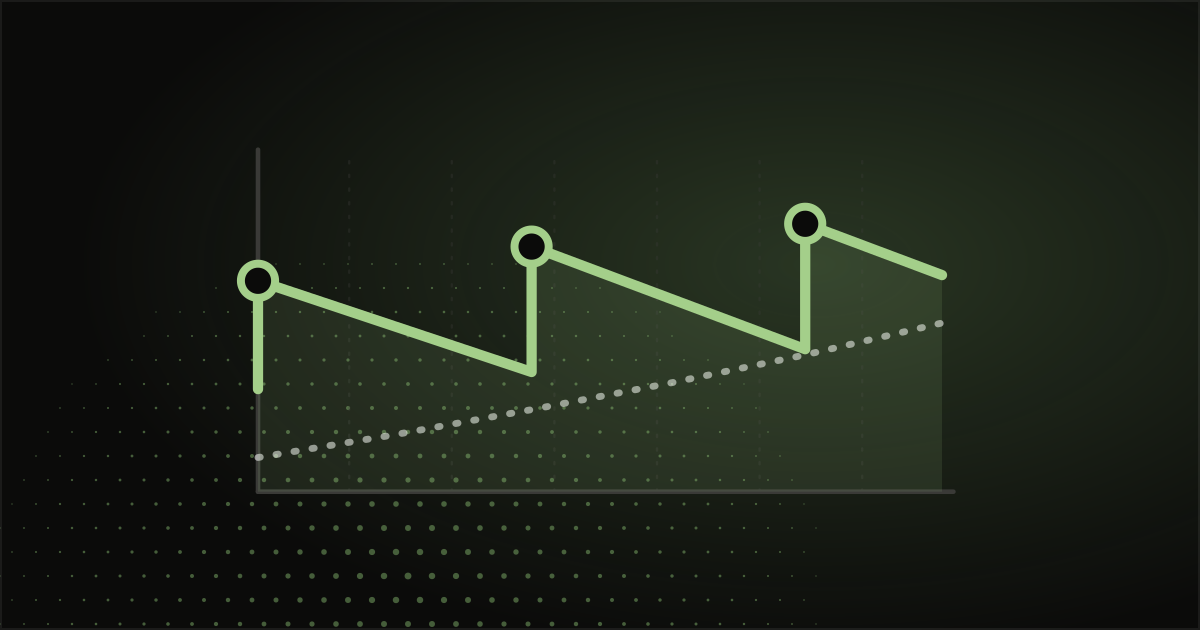
Many founders use a fixed percentage once the buffer is healthy: for example, 30–50 % of cash above the floor goes to personal pay, the rest stays for product. The exact split is less important than writing it down and reviewing it quarterly.
How much is “enough” personal pay?
There is no universal number. The useful questions are:
- What monthly personal expenses must be covered so you can focus full-time (rent, food, health, minimum debt service)?
- Do you have other income (contract work, savings, a partner) that changes the urgency?
- What pay level lets you stop checking the bank balance every day?
Start lower than the full replacement salary you might earn in a job. Many solo founders begin with a modest draw that covers essentials and raise it only after several consecutive months above the buffer. Raising pay is reversible in the short term; cutting it after you have adjusted lifestyle is harder.
If the product cannot support even a modest draw after the buffer is funded, treat that as a signal about pricing, costs, or retention rather than a reason to drain reserves.
Tax and entity notes that affect timing
How you pay yourself depends on structure:
- Sole proprietor / pass-through: draws are not “salary” in the corporate sense; you still owe self-employment or equivalent taxes on profit. Set aside a percentage each month so the tax bill is not a surprise.
- Single-member LLC or equivalent: often treated the same as a sole prop for tax, but confirm locally.
- Corporation: formal payroll or dividends have different withholding and compliance requirements.
Because rules vary widely, the practical step is the same everywhere: estimate the tax on expected profit, transfer that amount to a tax savings account monthly, and treat the rest according to the buffer and pay rules above. Do not use the tax reserve for personal spending.
When to increase or pause pay
Increase when:
- Buffer has been stable for at least two or three months.
- Churn and support load are not rising.
- You have a short list of reliability items that are already funded.
Pause or reduce when:
- A large one-time cost is coming (annual insurance, major infrastructure change, legal review).
- Revenue drops or a key customer delays payment.
- You are about to run an experiment that needs cash (a short paid test, a contractor for a critical fix).
Write the pause condition in advance so the decision is not made under stress.
Practical checklist for the first salary decision
- Business and personal accounts are separate.
- Monthly bookkeeping is current.
- Fixed operating costs are known and a multi-month buffer is defined.
- Estimated tax percentage is set aside each month.
- A written rule exists for what percentage or amount of excess cash goes to personal pay.
- The first draw is modest and reviewable after 60–90 days.
- You have a note of the conditions that would pause future draws.
Common mistakes and how to avoid them
- Paying yourself from the first invoice. Wait until the buffer exists. One good month is not a trend.
- Ignoring tax. A profitable product that leaves you with a large unexpected tax bill creates personal stress that hurts the business.
- No written rule. Without a rule, every month becomes a negotiation with yourself. Decide the policy when things are calm.
- Treating growth spend as optional. A product that never funds basic reliability eventually costs more in support time and refunds than the salary you skipped.
Paying yourself is not a sign that the product has “made it.” It is a tool that keeps the founder able to keep building. The product still needs its own cash for reliability and the next useful improvement. A buffer floor plus a simple percentage rule is usually enough to make both possible without constant debate.
Review the numbers once a quarter. Adjust the floor if costs change, and adjust the pay percentage if your personal situation or the product’s stability has shifted. The goal is a system you can follow on a quiet Sunday afternoon, not a decision you have to relitigate every time revenue arrives.